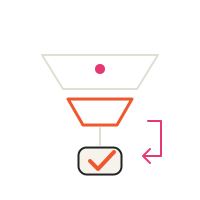
Make the next step easier to take.
Improve the pages, forms and checkout steps between interest and action.
Discuss your project
Start with
your situation.
Businesses investigating why visitors hesitate, abandon a task or submit enquiries that do not match the offer.
More visitors will not resolve an unclear service description or a difficult form. We review the journey, identify plausible barriers and propose changes that can be evaluated with the evidence and traffic available.

Find where visitors hesitate, then test a focused change.
First, define the action you want to improve: a relevant enquiry, a booking request or a completed purchase. We then examine what a visitor needs to understand before taking it. Missing service information, uncertainty about the process or a difficult form can each create a different barrier.
The review combines available analytics with the content and interaction details. Customer questions, feedback from the team handling enquiries and representative user tasks can add context. We use that evidence to form an explanation of the friction and distinguish observations from assumptions.
Each recommendation states what should change, why it may help and how it can be evaluated. The method depends on traffic and evidence: usability reviews and measured changes may be more appropriate than an A/B test on a small site. Findings include their limitations and the decision about what to keep, refine or reverse.
Journey & measurement review
Check key actions, available analytics and friction in important pages and forms.

Prioritised improvements
Specific recommendations for messages, page structure, trust and interaction details.

Experiment plan
Hypotheses, success measures and a suitable validation method for your traffic level.
Real situations.
A practical starting point.
Visitors who struggle to understand the offer
Review message hierarchy, scope explanations and the information needed to decide whether the service is relevant.
A form or checkout with unnecessary friction
Examine fields, validation, mobile behaviour and exception handling to identify improvements to the action itself.
Activity that does not translate into qualified enquiries
Connect acquisition, page intent and the way enquiries are handled, then identify where the journey becomes misaligned.

A clear way
forward.
- 01
Understand the behaviour
Use available evidence and journey reviews to identify plausible barriers.
- 02
Form a hypothesis
Define the change, expected effect and how it will be assessed.
- 03
Test & learn
Implement the agreed improvement and review the result with its limitations.
Useful progress,
clearly defined.
- A clearer picture of journey friction
- Improvements linked to specific hypotheses
- Better-informed decisions about the customer experience
A good brief.
A shared understanding.
We prioritise changes by their expected usefulness and the confidence in the evidence behind them. Experiments include a defined measure, a suitable review point and a decision about what would justify keeping or reversing the change. Your team receives the reasoning as well as the recommendation.
What to bring to the first conversation
- A definition of the actions and enquiry quality that matter to you
- Available measurement and relevant customer or team feedback
- Access to the pages and workflows included in the review
Bring what you have. We can work through the open questions together.

Before we
get started.
Do we need large amounts of traffic?
Not for an initial review. Reliable A/B tests need sufficient traffic, so smaller sites may benefit more from usability work and carefully observed changes.
Will every change improve conversion?
No. Testing exists because outcomes are uncertain. We document the evidence and use it to decide what to keep, refine or reverse.
Can you review a site without analytics?
Yes. We can begin with the journey, content and interaction details. We will be explicit about what that review can establish and what would need measurement or user feedback to validate.
Does conversion work mean making pages more aggressive?
No. A useful journey helps visitors understand the offer and make an informed choice. Clear information, comfortable interactions and an appropriate next step are the foundation of our approach.
Let's talk about your next step.
Describe the problem you want to address and what already exists. We will discuss how this service could support your business.